Evelyn Mold
The CallerEvelyn Mold is a determined, practical woman whose encounter with a false hospital alert shows how a campaign of fabricated messages can breach the security of ordinary life. At Central Hospital, her urgent arrival meets not the commotion she expects but a receptionist who does not understand why Evelyn’s name should set anything in motion; the resulting disorientation follows her home and interrupts the familiar intimacy she shares with her daughter, Frances Mold.
Identity and Self-Image
Evelyn sees herself as strong, determined, down-to-earth, and realistic. Her confidence has a history behind it: she has rafted down the Sjoa River and run the Oslo Marathon twice. She does not take life for granted, and has believed she can handle a setback. The hospital episode puts that self-understanding under pressure—not because the narrative shows her becoming helpless, but because an experience she cannot readily place leaves her unsure how to resume ordinary life.
The Encounter at Central Hospital
Central Hospital is a thirteen-storey building constructed in 1964, with two later wings. Its busy entrance is organized around a light-wood information counter beside blue waiting-room couches; people, lift traffic, ringing telephones, and the swoosh of the double glass doors make the desk a public place where help is expected to begin. Evelyn rushes in looking exhausted, as if she has run from the car park. Though perhaps forty and wearing high heels, she reaches the counter quickly, her thick dark hair gathered at the back of her neck.
She gives her name with the expectation that it will immediately mean something to the staff—that people will hurry and bells will ring. Instead, the receptionist asks whether she wants to visit someone. Evelyn has to explain that she is Evelyn Mold herself. She plants her hands on the counter and knocks over a box of paper clips without seeming to notice; then she touches her throat, and her cheeks lose their color. The mismatch between her urgent expectation and the calm desk makes the episode visible in her body before she can explain it.
The receptionist lowers her voice after noticing someone watching from the blue couches. Discretion is part of her work in a building marked by sickness and death, but it cannot resolve Evelyn’s confusion. When the receptionist mentions the person making prank calls about false obituaries and messages, the larger campaign enters the encounter as an explanation for the kind of disturbance Evelyn has faced, rather than as a crisis the hospital staff can simply set right.
Home with Frances
Evelyn and Frances arrive home at about the same time. As Evelyn drives into the driveway, she sees a scooter. The account gives no further detail about it, but its presence registers in the moment of return, as the two women come back to a place that should restore routine.
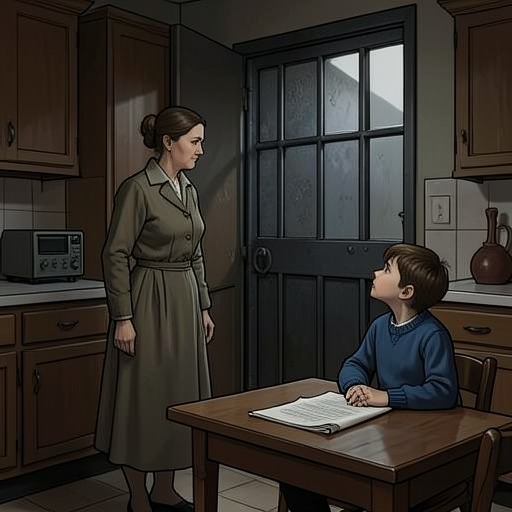
They say little. Their home is associated with sunlight in the windows, birds in the trees, television in the corner, and conversations that usually flow with tenderness, love, and laughter. Now they feel awkward and do not know how to handle what they have been through. The contrast is not between home and a newly revealed danger so much as between a familiar relationship and the silence that has briefly made it difficult to inhabit their ordinary closeness.
Significance
Evelyn’s response gives the prank campaign a domestic consequence beyond the false message itself. The hospital scene turns on failed recognition: she expects her name to summon an immediate response, but the person at the desk hears only a name and a request she cannot yet understand. At home, the aftermath persists without dramatic action. Evelyn’s practical self-image remains part of who she is, yet the shared quiet with Frances shows that resolve cannot instantly restore the ease the hoax has disrupted.